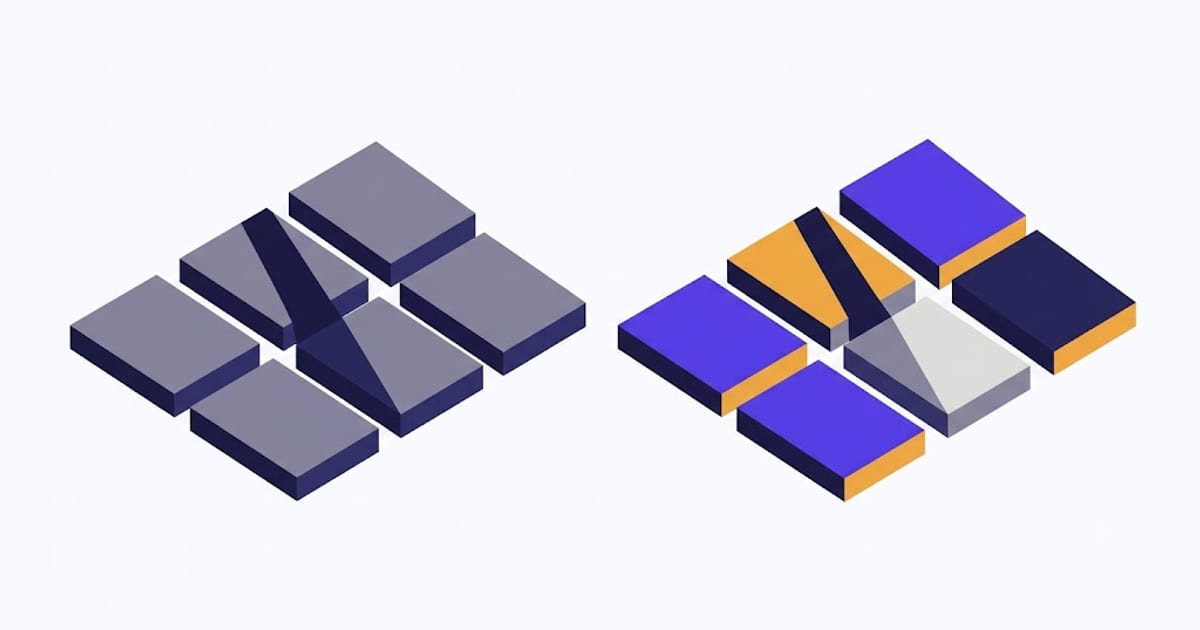
Both convert DC to AC. Both are made by companies that will outlive the warranty. The choice is decided by the roof, and it is decided almost entirely by three conditions.
What a string actually loses to shade
Panels in a series string share one current. When one panel is shaded, its current drops, and the string is pulled toward that current.
Modern panels have bypass diodes — normally three, each covering a third of the cells — so a fully shaded panel is not a dead short on the string. It drops out in thirds instead.
The practical result, on a ten-panel string:
| Shade condition | String inverter loss | Microinverter loss |
|---|---|---|
| One panel, one third shaded | ~4–8% of the string | ~3% of one panel |
| One panel, fully shaded | ~10% of the string | ~10% of one panel |
| Two panels partly shaded, different strings | ~8–15% | ~2% of array |
| Morning shade clearing by 10 am | Small, and only while present | Same |
The loss is real but smaller than the brochures imply — bypass diodes do most of the work. The case for per-panel electronics is strongest when shade is moving across different panels through the day, because that is when the string is never fully clear.
The three conditions that decide it
1. How many roof planes. A string inverter needs each string to be panels of the same orientation and tilt. One clean south plane: one string, no problem. East and west faces plus a dormer: three planes, each needing its own string or its own MPPT input, and small planes waste inverter capacity. Three or more planes points to microinverters.
2. Whether shade moves. A chimney shadow that crosses four different panels between noon and 5 pm is the case microinverters were built for. A row of trees that shades the whole array before 9 am is not — nothing is generating much then anyway.
3. Where the array is going to end up. Adding four panels to a string array later means matching the existing panels or building a new string; adding four microinverters means adding four. If the roof is likely to be extended, per-panel is the flexible option.
Cost, over the life rather than at purchase
For an 8 kW system:
| Up front | Year 12 | 25-year total | |
|---|---|---|---|
| String inverter | $1,400 | +$1,800 replacement | $3,200 |
| String + optimisers | $2,200 | +$1,800 inverter | $4,000 |
| Microinverters | $2,800 | — (25 yr warranty) | $2,800 |
The up-front ranking reverses over the life, because a string inverter is very likely a two-purchase component and microinverters usually are not. See solar inverter cost for the per-watt figures behind this.
Optimisers land awkwardly here: they add per-panel hardware and keep the central inverter that has to be replaced.
What each one costs you in failure
String. One failure stops the whole array. It is a single accessible box, usually in a garage, and swapping it is a short job.
Microinverters. One failure stops one panel, and you may not notice without monitoring. Replacing it means getting on the roof and lifting a panel — a small fault in an expensive place.
Twenty devices at a 0.05% annual failure rate is about one call in a decade. That is the honest shape of it: microinverters fail more often in absolute count and matter far less each time.
The short answer
- Single unshaded plane → string inverter. The premium buys nothing.
- Moving shade, or three-plus planes → microinverters.
- One awkward plane on an otherwise clean roof → string inverter with optimisers on that plane only.
- Battery planned within five years → hybrid string inverter, and decide the battery brand now, because the hybrid will decide it for you.