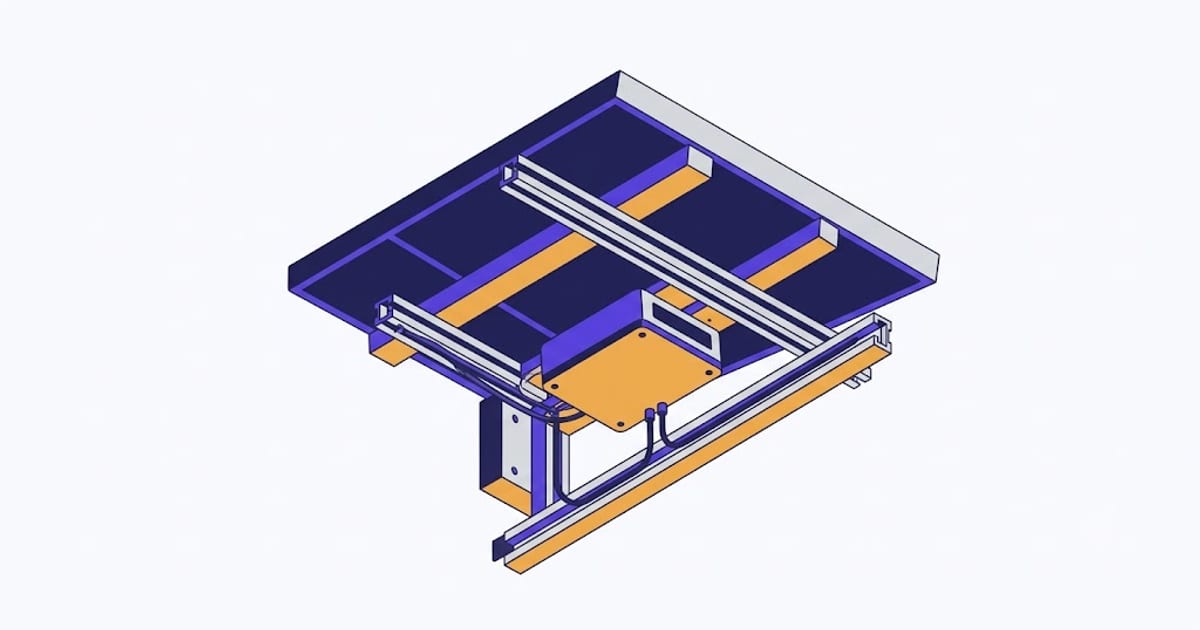
Three architectures, and the difference between them is where the conversion from DC to AC happens.
String inverter — panels wired in series into one central box, usually on a wall. One conversion point for the whole array.
Microinverters — a small inverter under each panel. Conversion happens on the roof, per module.
Power optimizers — a middle path. A small DC device per panel handles the per-module optimization, and one central inverter still does the DC-to-AC conversion.
Shading is the deciding factor
Panels in a string share a current path. When one panel's output drops, it constrains the panels wired with it — the string is limited by its weakest member.
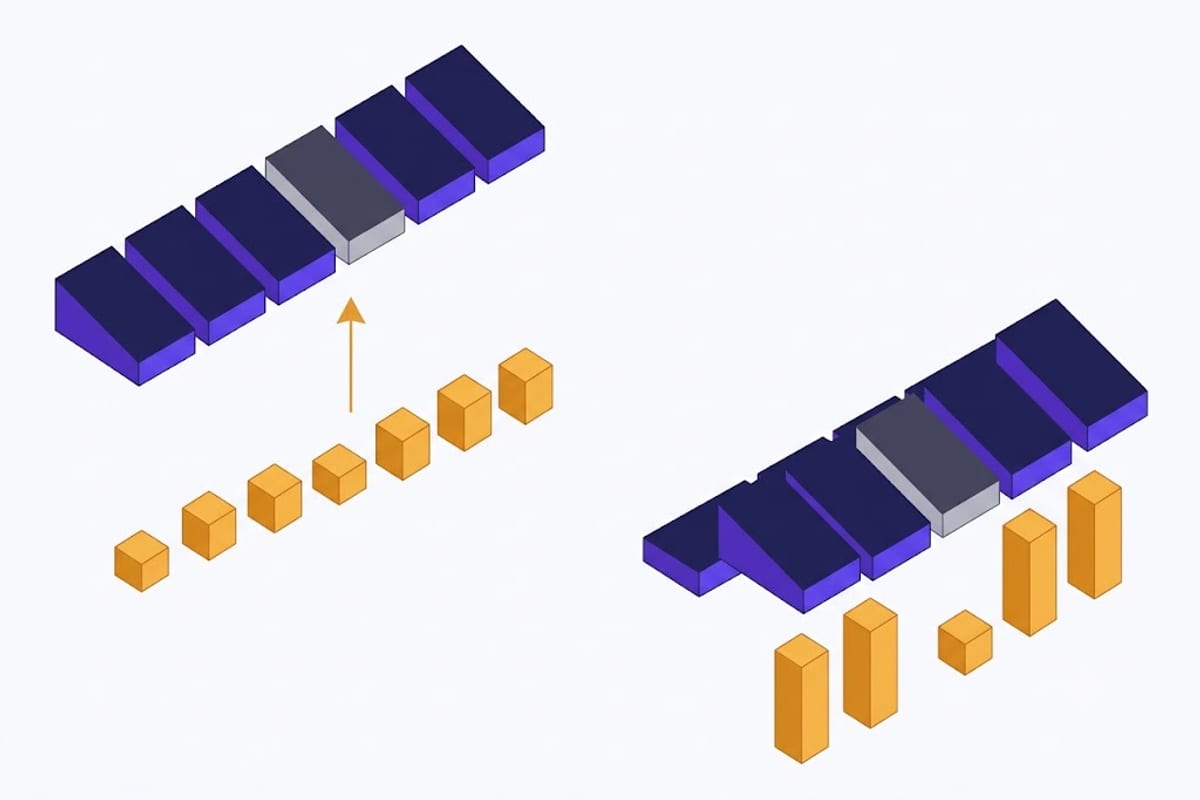
Microinverters and optimizers break that link. Each panel operates at its own maximum, so a shaded module costs you that module and nothing more.
The practical consequence: on a roof with a chimney, a vent stack, a neighbouring tree or a dormer, module-level electronics recover output that a string inverter simply loses. On a completely clear roof, they recover nothing and cost more.
The size of the effect is larger than most people expect — see shading loss.
Multiple roof faces
A string must share orientation. Panels facing different directions or sitting at different pitches produce different currents at different times, and putting them in one string wastes the difference.
A string inverter handles this with separate MPPT inputs — but their number is limited, typically two or three. Beyond that, or with awkward small groups of panels on several faces, module-level electronics let every panel do its own thing.
Complex roofs are the second-strongest argument after shade, and on some roofs the two arrive together.
Failure modes are different, not better or worse
String inverter: one device, so one failure takes the whole array offline. It is at ground level or on a wall, so replacing it is straightforward — and it is the component most likely to need replacing during the panels' life, typically at 10–15 years against 25 for the panels.
Microinverters: many devices, so one failure costs one panel's output and you may not notice without monitoring. But the failed unit is on the roof, under a panel, which means removing the panel to reach it. Warranties are long — commonly 25 years — precisely because the replacement labor is the expensive part.
More units means more things that can fail, but each failure is a small, contained loss rather than a total one. Which you prefer depends on whether you would rather have a rare large outage or occasional invisible small ones.
Monitoring
Module-level systems report per-panel production. That sounds like a nicety and is genuinely useful: it tells you which panel is dirty, shaded or failing, without anyone going onto the roof.
A string inverter reports the array as a whole. A gradual decline shows up, but not which panel caused it.
Cost, and the rapid shutdown rule
Microinverters typically add somewhere around $0.10 to $0.30 per watt installed — on a 10 kW system, roughly $1,000 to $3,000. Optimizers usually sit between the two.
But in the US, NEC rapid shutdown requirements mean most residential rooftop arrays need module-level shutdown capability anyway. Where that applies, a plain string inverter needs added hardware to comply, and the cost gap narrows considerably — sometimes to nothing. Check what your jurisdiction enforces before treating the price difference as real.
Choosing
- Clear, single-orientation roof, cost-driven — string inverter.
- Any meaningful shade — module-level, and the payback is in recovered production rather than convenience.
- Several roof faces or an irregular roof — module-level.
- You want per-panel visibility — microinverters or optimizers.
- Ground mount with clear sky — string inverter, comfortably.
Sizing whichever you choose is a separate question, covered in inverter sizing.
FAQ
Are microinverters better than a string inverter?
Not universally. They are better on shaded or complex roofs, where they recover production a string would lose. On a clear single-orientation roof they cost more and gain little.
How much more do microinverters cost?
Roughly $0.10–$0.30 per watt installed. Rapid shutdown requirements narrow the gap because a string inverter often needs extra hardware to comply.
What happens when a microinverter fails?
You lose that panel's output until it is replaced, and reaching it means removing the panel. Warranties are typically 25 years for this reason.
Do power optimizers do the same thing?
They provide the same per-panel optimization and monitoring, but conversion to AC still happens at one central inverter — so you keep a single point of failure while removing the shading penalty.
How long does a string inverter last?
Typically 10–15 years, against about 25 for the panels, so budget for at least one replacement during the array's life.