Off-grid & RV
Off-grid is not grid-tied with batteries added. It is a different design problem, because there is no backstop when the numbers are wrong.
The connection quote decides it
Utilities price a line extension per distance, and beyond a few hundred meters the figure gets large quickly. Where the extension costs more than a full off-grid system, off-grid stops being a preference and becomes the cheaper option.
Get that quote in writing before designing anything.
Where the money goes
| Component | Share |
|---|---|
| Battery bank | 30–45% |
| Panels | 15–25% |
| Inverter / charger | 10–15% |
| Charge controller | 5–8% |
| Racking | 5–10% |
| Wiring and protection | 5–10% |
| Labor and permitting | 10–20% |
Panels are the part everyone budgets carefully and they are a fifth of the job. The bank dominates, and it is the only component with a scheduled replacement.
Loads are cheaper to reduce than to supply
The largest lever in off-grid design, and the most underused. Moving water heating to propane, fitting an efficient fridge and killing phantom loads can halve daily consumption — and halving the load halves both the array and the bank, the two most expensive items.
A dollar spent on efficiency routinely displaces three to five dollars of generation and storage.
Winter sizes the system
December production across most of the US is 40 to 60% of the annual average. Size the array for the worst month and the bank for the longest cloudy run within it. An off-grid budget built from annual averages is short by roughly a third.
The generator is not a failure
Sizing a bank for the worst cloudy week of the year is enormously expensive. Two or three days of storage plus a generator for the rare shortfall costs far less in total. Budget for it, its fuel and an automatic start.
What gets forgotten
Low-voltage DC means high current, so cable is thick and expensive and must be sized for voltage drop rather than ampacity. Add overcurrent protection, a DC disconnect, grounding, and permits — a ground-mounted array is the tallest metal object in a field.
3 articles
 How Much Solar for an RV? Size the Battery First, Then the Panels
RV solar gets sized backwards. The panels are the visible part, but the battery is what runs the night, and the amp-hour budget decides both.
 What an Off-Grid System Actually Costs, Component by Component
Panels are the cheapest part of an off-grid system and the part everyone budgets for. The batteries are the expensive part, and they need replacing.
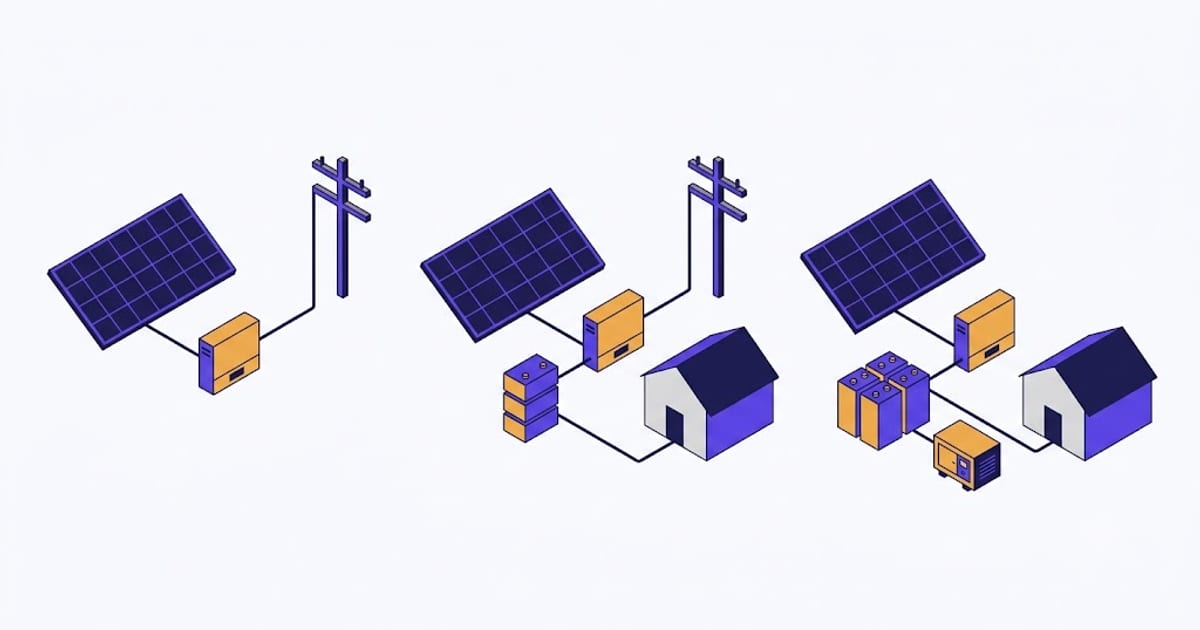 Grid-Tied, Hybrid or Off-Grid: Three Systems, Three Different Budgets
The most common surprise in residential solar is discovering that a grid-tied array does nothing during a blackout — and that it is designed that way on purpose.