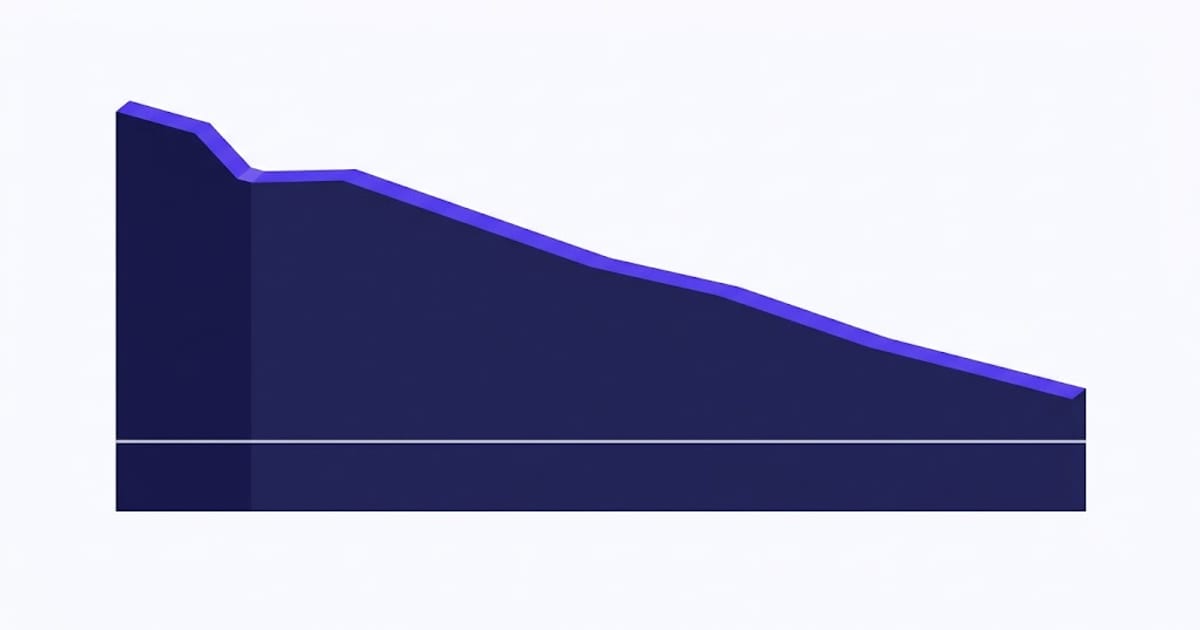
Solar panels lose output slowly and predictably. Typical rates:
- Premium monocrystalline: 0.25 to 0.4% a year
- Standard monocrystalline: 0.4 to 0.55%
- Polycrystalline: 0.5 to 0.7%
- Thin film: 0.5 to 1.0%
At 0.5% a year, a panel produces about 88% of its original output after 25 years. At 0.3%, about 93%.
First-year drop is separate
Most panels lose 1 to 3% in the first few months from light-induced degradation, then settle into the linear rate. Warranties account for this — the year-one guarantee is typically 97 to 98%, not 100%.
Two warranties, and they are not the same
Product warranty covers manufacturing defects, delamination, frame and junction box failure. Usually 10 to 12 years; premium manufacturers offer 25.
Performance warranty guarantees output stays above a stated curve. Typically 25 years to 80 or 85% of nameplate. The better manufacturers now guarantee 87 to 92% at 25 years.
The product warranty is the one that matters for anything that physically goes wrong, and it is usually the shorter one. Compare it separately.
25 years is a warranty, not a lifespan
Panels installed in the 1980s are still producing. The 25-year figure is the period the manufacturer will underwrite, chosen for commercial reasons rather than physics.
Realistic expectation: 30 to 40 years of useful output, with a slow decline and increasing risk of individual panel failure toward the end.
The inverter is what you will replace
String inverters last 10 to 15 years. Microinverters are warranted 20 to 25 and the honest expectation is somewhere in between.
Budget one inverter replacement over the life of the array. It is a known, scheduled cost that most payback calculations quietly omit — and it is a much larger factor in lifetime economics than panel degradation is.
What actually shortens panel life
Heat. Every degradation mechanism runs faster hot. Roof-mounted panels with poor rear ventilation degrade faster than ground mounts with free airflow. Leave the rated standoff gap.
Water ingress at the junction box. The most common real-world failure, and it is a workmanship and sealant question.
Micro-cracks. Caused by hail, by walking on panels, and by careless handling during install. They may not show for years and then appear as hot spots.
Potential-induced degradation. A voltage-driven mechanism in humid conditions on some older module types. Largely designed out of current panels and worth asking about on anything second-hand.
Which means the derate is not a degradation allowance
The 0.77 PVWatts derate covers present-day losses — heat, soiling, wiring, inverter. Degradation is on top of it and accumulates. A 25-year production estimate should apply both, and many quotes apply neither.