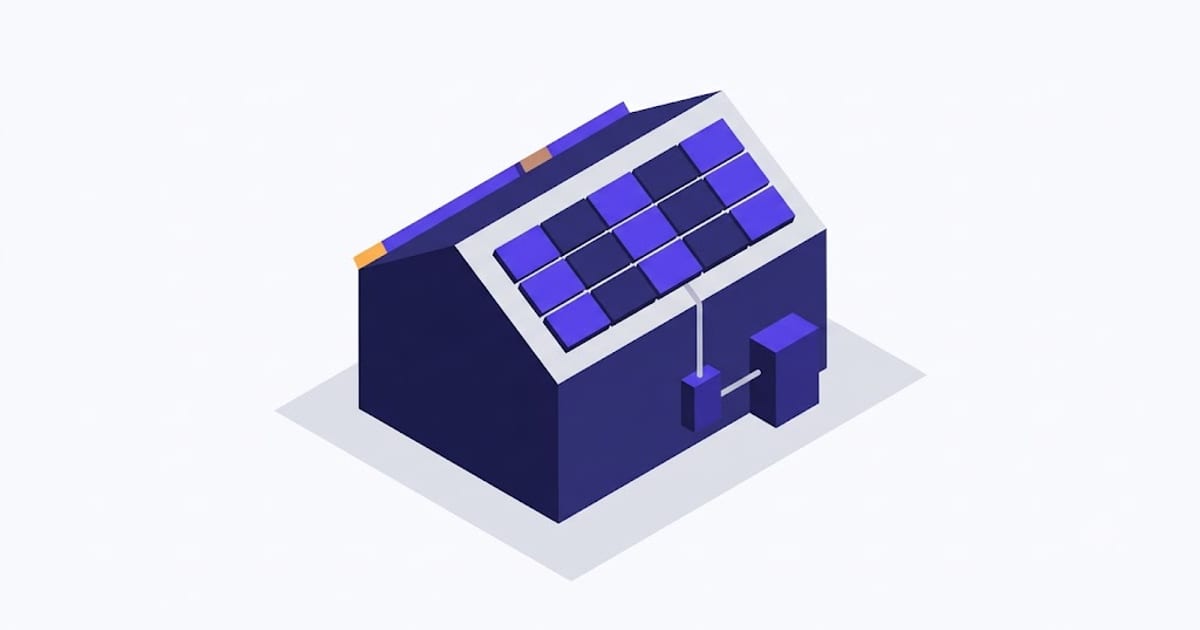
Sizing a home solar array is one equation:
system kW = annual kWh ÷ (365 × peak sun hours × derate factor)
Three inputs. Two of them you can look up in a minute. The third — the derate factor — is where a fifth of your output disappears, and it is the one that sizing calculators hide behind a single number.
The three inputs
Annual kWh comes off your own electricity bills, not from an average. Take twelve months, because a single month is misleading in either direction: a July bill in Arizona and a January bill in Minnesota are both outliers. Add them up.
Peak sun hours is the number of hours per day your location would receive if all its sunlight arrived at a standard test intensity. It is not daylight hours — it is a way of expressing total daily solar energy as a duration. It ranges from roughly 3.5 in the Pacific Northwest and New England to around 5.5 in the desert Southwest. NREL's PVWatts tool is the usual free source for a location-specific figure.
Derate factor is everything between the number printed on the panel and the energy that reaches your meter. The rest of this page is largely about that.
The table
System size in kW, at a derate of 0.80:
| Monthly use | Annual | 3.5 sun hours | 4.5 sun hours | 5.5 sun hours |
|---|---|---|---|---|
| 500 kWh | 6,000 | 5.9 kW | 4.6 kW | 3.7 kW |
| 750 kWh | 9,000 | 8.8 kW | 6.8 kW | 5.6 kW |
| 1,000 kWh | 12,000 | 11.7 kW | 9.1 kW | 7.5 kW |
| 1,250 kWh | 15,000 | 14.7 kW | 11.4 kW | 9.3 kW |
| 1,500 kWh | 18,000 | 17.6 kW | 13.7 kW | 11.2 kW |
| 2,000 kWh | 24,000 | 23.5 kW | 18.3 kW | 14.9 kW |
The same house needs 60 % more array in Seattle than in Phoenix. That is the whole story of the sun-hours column, and it is why a national average system size is a useless planning number.
Translated into things you can count, at 400 W per panel and about 21 sq ft per panel:
| Use | Sun hours | System | Panels | Roof area |
|---|---|---|---|---|
| 500 kWh/mo | 5.5 | 3.7 kW | 9 | ~196 sq ft |
| 500 kWh/mo | 3.5 | 5.9 kW | 15 | ~308 sq ft |
| 1,000 kWh/mo | 5.5 | 7.5 kW | 19 | ~392 sq ft |
| 1,000 kWh/mo | 3.5 | 11.7 kW | 29 | ~616 sq ft |
| 1,500 kWh/mo | 5.5 | 11.2 kW | 28 | ~588 sq ft |
| 1,500 kWh/mo | 3.5 | 17.6 kW | 44 | ~925 sq ft |
Roof area is for the panels alone. Real installations need setbacks from ridges and edges for fire access, clear paths around obstructions, and usable space only on suitable pitches and orientations — so plan on needing meaningfully more roof than the table shows.
Opening up the derate factor
Most calculators use 0.80 and leave it there. Here is what it is made of:
| Loss | Factor | Running total |
|---|---|---|
| Inverter efficiency | ×0.96 | 0.960 |
| Wiring and connections | ×0.98 | 0.941 |
| Soiling | ×0.97 | 0.913 |
| Temperature | ×0.92 | 0.840 |
| Orientation and tilt | ×0.97 | 0.814 |
| Panel tolerance mismatch | ×0.98 | 0.798 |
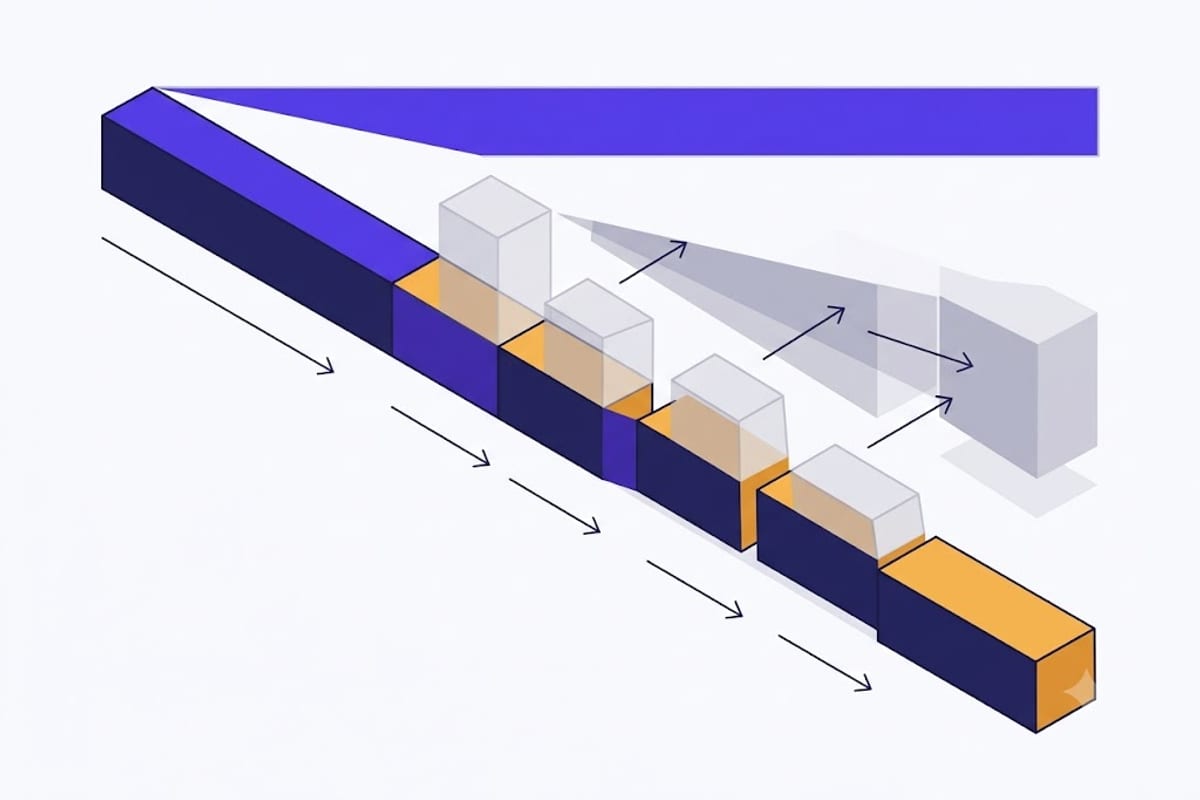
Two of those deserve attention because they are the ones you can influence.
Temperature is the biggest single loss, and it is counter-intuitive. Panels are rated at 25 °C cell temperature. A panel in full summer sun runs far hotter than the air around it, and output falls as it heats. This is why a mild bright day can out-produce a hot one, and why an array with an air gap beneath it beats one lying flat against the roof surface.
Soiling depends entirely on where you are. Under an oak, near a dirt road, in a region with a long dry season and pollen, the 0.97 is optimistic. Somewhere with regular rain and clean air it is pessimistic.
Adjust the derate rather than accepting 0.80 as a law. A well-oriented, well-ventilated array in a clean climate can justify 0.84. A flat-mounted array on a hot roof with partial afternoon shade cannot.
Shading is not in that table on purpose. Shading is not a percentage loss — it is a design problem. Even a small shadow on one panel can drag down a whole string on a string-inverter system, which is the main argument for microinverters or optimisers on a roof with a chimney, vent stack or neighbouring tree.
Batteries are a different question entirely
Array size answers "how much energy do I generate?" Battery size answers "how much do I want to run without the grid?" They are unrelated calculations, and conflating them is the fastest way to overspend.
The battery equation:
nameplate kWh = (daily kWh you want to cover × days of autonomy) ÷ depth of discharge
Depth of discharge is the fraction of the nameplate you may actually use without damaging the battery. It is where lead-acid and lithium separate:
| Daily load | Chemistry | 1 day | 2 days |
|---|---|---|---|
| 10 kWh | Lead-acid (50 % DoD) | 20.0 kWh | 40.0 kWh |
| 10 kWh | Lithium (80 % DoD) | 12.5 kWh | 25.0 kWh |
| 20 kWh | Lead-acid (50 % DoD) | 40.0 kWh | 80.0 kWh |
| 20 kWh | Lithium (80 % DoD) | 25.0 kWh | 50.0 kWh |
| 30 kWh | Lead-acid (50 % DoD) | 60.0 kWh | 120.0 kWh |
| 30 kWh | Lithium (80 % DoD) | 37.5 kWh | 75.0 kWh |
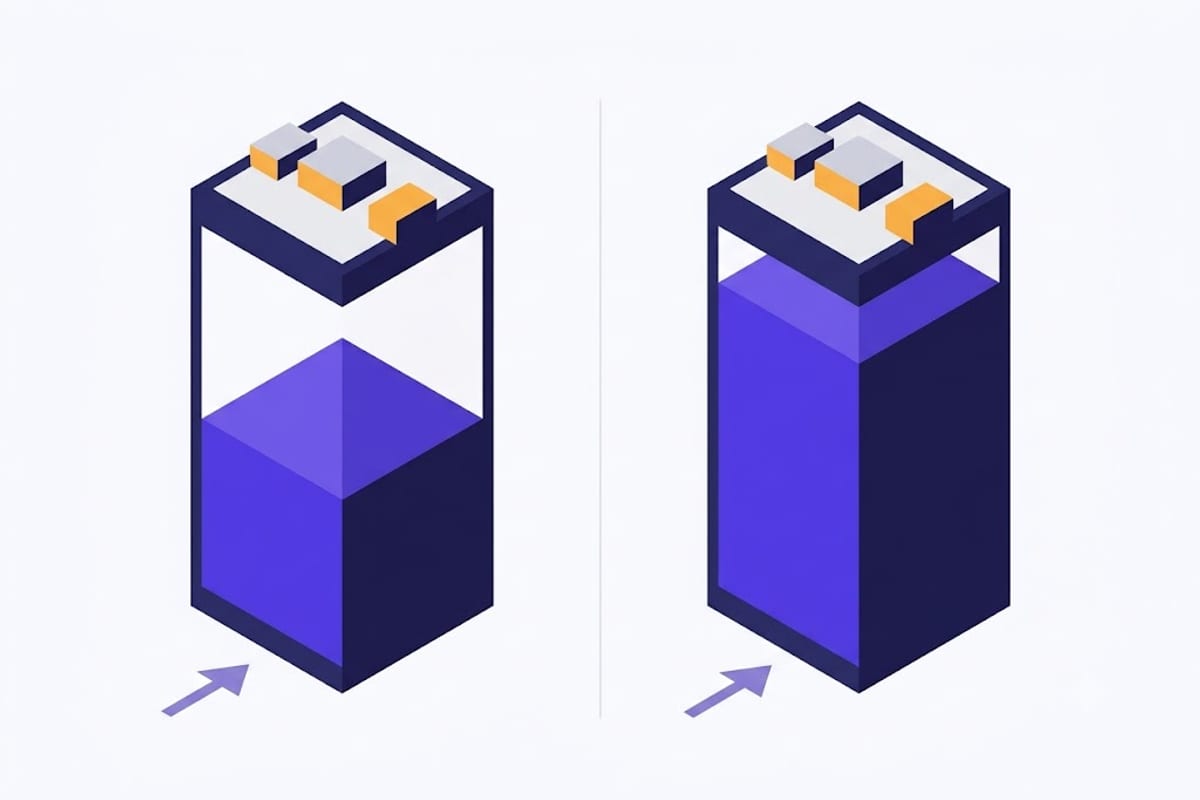
A lead-acid bank has to be about 1.6 times the nameplate of a lithium one to deliver the same usable energy. Compare installed cost per usable kWh, never per nameplate kWh — that single substitution changes which chemistry looks cheaper.
Also worth saying plainly: "daily kWh you want to cover" is almost never your whole daily use. Covering a fridge, some lights, the internet and a few outlets through an evening outage might be 3–5 kWh. Covering everything including electric heat and a well pump is a different order of magnitude, and sizing for it when you wanted the first thing is how battery quotes end up shocking people.
Worked example
A house using 1,050 kWh a month, 4.6 peak sun hours, wanting overnight backup for essentials:
- Annual: 1,050 × 12 = 12,600 kWh
- Derate: good orientation, ventilated mount, clean area → use 0.82
- Array: 12,600 ÷ (365 × 4.6 × 0.82) = 9.2 kW
- Panels: 9,200 ÷ 400 = 23 panels, about 480 sq ft of panel plus setbacks
- Backup load: fridge, lights, network, a few outlets ≈ 4 kWh overnight
- Battery: lithium at 80 % DoD, one day → 4 ÷ 0.8 = 5 kWh nameplate
Note the shape of that answer: a 9.2 kW array and a 5 kWh battery. Generation and storage are sized by different questions and land in different places.
What this page does not cover
- Net metering rules change the economics completely and vary by state and utility. An array sized to your annual total assumes you get fair credit for what you export; where you do not, the right size is smaller and shaped around your daytime load.
- Roof suitability — pitch, orientation, structure, remaining life. Putting an array on a roof with five years left in it means paying to remove and refit it.
- Permits, interconnection and inspection are jurisdiction-specific and often the longest part of the timeline.
- PVWatts and similar tools model hourly weather for your actual coordinates and will beat the arithmetic above for a final design. Use this page to know whether a quote is sane, not to replace a site assessment.
The formula gets you within ten percent in about five minutes. That is enough to tell whether the number on a quote is describing your house or somebody else's.
Read next
- How Many Panels for 1,000 kWh a Month — The answer ranges from fifteen panels to thirty-four, for the same house using the same electricity.
- Converting kW to Panels, and the Three Ratings That Get Confused — Three different numbers on a solar quote are all measured in kilowatts and none of them mean the same thing.
- Roof Space for a 10 kW Array: Panel Area Is Not Roof Area — Twenty-five panels cover about 525 square feet.
- Daily Solar Output by Region, and the Seasonal Swing Behind the Average — An annual average tells you what the system produces over a year.